

ด้วยความตั้งใจที่จะช่วยขับเคลื่อนผลประโยชน์ร่วมกันระหว่างไทยและสหรัฐฯ
ผมจึงเขียนจดหมายถึงประธานาธิบดีโดนัลด์ ทรัมป์ เพื่อเสนอให้พิจารณานโยบายลดภาษีนำเข้าสินค้าจากประเทศไทยลงเหลือ 10% ซึ่งเชื่อว่าจะก่อให้เกิดประโยชน์ต่อทั้งสองประเทศ ทั้งในเชิงเศรษฐกิจและความสัมพันธ์ระยะยาว
ด้วยความเคารพและมุ่งหวังดี ผมขออนุญาตนำเนื้อหาจดหมายดังกล่าวมาเผยแพร่ไว้ ณ ที่นี้ครับ
ที่ สกสช.68/3888
31 กรกฎาคม 2568
เรื่อง: ข้อเสนอในการปรับอัตราภาษีศุลกากรระหว่างไทยและสหรัฐอเมริกา
เรียน ฯพณฯ ประธานาธิบดี โดนัลด์ เจ. ทรัมป์
เนื่องด้วยกระผม ศ.ดร.เกรียงศักดิ์ เจริญวงศ์ศักดิ์ ประธานสถาบันการสร้างชาติ (Nation-Building Institute) ประเทศไทย กระผมขอเรียนด้วยความเคารพว่า ประเทศไทยและสหรัฐอเมริกาเป็นพันธมิตรที่แน่นแฟ้นมาอย่างยาวนานกว่า 190 ปี มีความร่วมมืออย่างใกล้ชิดในด้านการทูต การค้า และความมั่นคงทั้งในระดับรัฐและระดับประชาชน
กระผมเข้าใจดีว่า ทุกประเทศมีสิทธิในการกำหนดนโยบายเพื่อประโยชน์แห่งชาติของตนเอง อย่างไรก็ตาม นโยบายการขึ้นอัตราภาษีที่สหรัฐฯ กำหนดไว้กับสินค้าจากประเทศไทยในปัจจุบัน ซึ่งสูงถึง 36% ได้ก่อให้เกิดผลกระทบอย่างลึกซึ้งต่อเศรษฐกิจไทย และยังสะเทือนต่อห่วงโซ่อุปทานของบริษัทสหรัฐฯ ในภูมิภาคด้วยเช่นกัน
ด้วยความตั้งใจแน่วแน่ที่จะหาทางออกที่เป็นประโยชน์ร่วมกัน กระผมใคร่ขอเสนอให้สหรัฐปรับลดอัตราภาษีดังกล่าวที่จัดเก็บกับประเทศไทยลงมาอยู่ในระดับที่สมเหตุสมผล คือ 10% ซึ่งเป็นอัตราภาษีพื้นฐานที่สหรัฐเก็บกับหลายประเทศ ด้วยเหตุผล ดังนี้
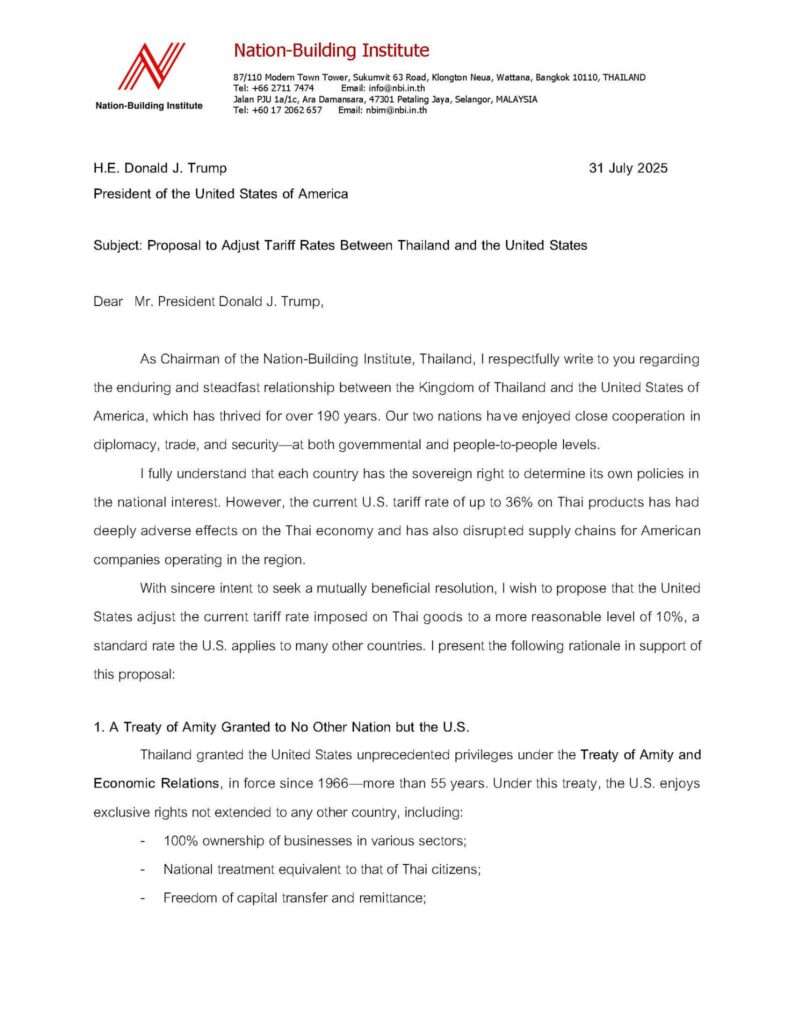
- ไทยมีสนธิสัญญาไมตรีฯ ที่ไม่เคยมอบให้ชาติใด นอกจากสหรัฐฯ
ประเทศไทยได้ให้สิทธิพิเศษแก่สหรัฐอเมริกาที่ ไม่เคยมอบให้ประเทศใดในโลก ผ่าน สนธิสัญญาไมตรีและเศรษฐกิจ ซึ่งมีผลบังคับใช้ตั้งแต่ปี 1966 หรือกว่า 55 ปีที่ผ่านมา โดยภายใต้สนธิสัญญานี้ สหรัฐฯ ได้รับสิทธิพิเศษที่รวมถึง:
- การถือครองกิจการในไทยได้ 100% ในหลายภาคธุรกิจ
- การได้รับการปฏิบัติเทียบเท่าคนไทย
- สิทธิโอนเงินเข้าออกโดยเสรี
- การคุ้มครองจากการเวนคืนทรัพย์สิน
นี่คือตัวอย่างความเชื่อมั่นอันลึกซึ้งที่ประเทศไทยมอบให้แก่สหรัฐฯ ซึ่งไม่เคยเกิดขึ้นกับชาติอื่นใด
- ข้อเสนอของรัฐบาลไทยทำได้จริง และดำเนินการได้ทันที
รัฐบาลไทยเสนอที่จะ ยกเลิกภาษีนำเข้าสินค้าจากสหรัฐฯ ถึง 90% ครอบคลุมสินค้าเกษตร เช่น ลำไย ปลานิล รวมถึงอนุญาตให้นำเข้ารถยนต์พวงมาลัยซ้ายได้โดยเสรี ข้อเสนอนี้ไม่ได้เป็นเพียงแค่แนวคิด แต่สามารถ ดำเนินการได้จริงภายใน 3 เดือน ซึ่งจะทำให้ท่านเป็นประธานาธิบดีสหรัฐฯ คนแรกที่สามารถเปิดตลาดของประเทศหนึ่งได้ถึง 90% ภายในเวลาเพียง 3 เดือน” - ไทยพร้อมเพิ่มการนำเข้าสินค้าหลักจากสหรัฐฯ อย่างเป็นรูปธรรม
ประเทศไทยพร้อมเพิ่มการนำเข้าสินค้าจากสหรัฐฯ เช่น ก๊าซธรรมชาติ ข้าวโพด และกากถั่วเหลือง ซึ่งจะช่วยลดดุลการค้าของไทยกับสหรัฐฯ ได้ถึง หนึ่งในสาม หรือประมาณ 15,000 ล้านดอลลาร์สหรัฐ ซึ่งข้อเสนอนี้สามารถดำเนินการได้ทันที หากมีข้อตกลงร่วมที่เหมาะสมจากฝ่ายสหรัฐฯ - ไทยดำเนินมาตรการจริงจังเพื่อป้องกันการเลี่ยงภาษีผ่านประเทศที่สาม
ประเทศไทยได้ดำเนินมาตรการเข้มงวดในการตรวจสอบและระงับการส่งออกสินค้าจากประเทศที่สามผ่านไทย เพื่อหลีกเลี่ยงภาษีของสหรัฐฯ (transshipment) ซึ่งเป็นสัญญาณของความจริงใจในการเคารพหลักการค้าเสรีอย่างเป็นธรรม และยืนเคียงข้างกับผู้ผลิตของสหรัฐฯ - แบบจำลองเศรษฐกิจ (CGE) ชี้ชัดว่า “ภาษี 10%” จะดีกว่าสำหรับทั้งสองฝ่าย
ข้อมูลจากแบบจำลอง CGE โดยสถาบันอนาคตศึกษาเพื่อการพัฒนา (IFD Institute for Future Studies for Development) ที่กระผมเป็นประธานกรรมการ พบว่า:
หากสหรัฐยังคงเก็บภาษี 36% กับไทย จะส่งผลเสียต่อสหรัฐฯ เองในระยะยาวอย่างมาก:
- จีดีพีจะติดลบ 1.28%
- สวัสดิการสังคมของสหรัฐฯ จะติดลบถึง 89,206.74 ล้านดอลลาร์สหรัฐ
- การส่งออกของสหรัฐฯ ลดลงถึง 18% ซึ่งกระทบต่อการจ้างงานและเศรษฐกิจภายในโดยตรง
แต่หากสหรัฐเก็บภาษีไทยเพียง 10% ผลลัพธ์จะดีต่อเศรษฐกิจของสหรัฐฯ มากกว่าเก็บ 36%: - จีดีพีของสหรัฐฯ จะ “ลดลงน้อยกว่า” โดยกรณีเก็บ 10% จีดีพีจะดีขึ้นจากกรณีเก็บภาษี 36% อยู่ที่ 8,316 ล้านดอลลาร์สหรัฐ หรือคิดเป็น 0.03%
- สวัสดิการสังคมจะ “เสียหายน้อยลง” โดยกรณีเก็บ 10% จะดีกว่ากรณีเก็บ 36% อยู่ 2,795 ล้านดอลลาร์สหรัฐ
- การส่งออกของสหรัฐฯ ในกรณีเก็บภาษี 10% จะ “ลดลงน้อยกว่า” โดยส่งออกได้มากกว่ากรณี 36% อยู่ 0.31%

- ผลประโยชน์ร่วมในระยะยาว
การมีอัตราภาษีที่เป็นธรรมต่อประเทศไทยจะส่งเสริม:
- ความมั่นคงของห่วงโซ่อุปทานของบริษัทสหรัฐฯ ในเอเชีย
- การลงทุนและการจ้างงานของบริษัทอเมริกันในไทย
- ความร่วมมือเชิงภูมิยุทธศาสตร์ในภูมิภาค เป็นต้น
กระผมขอเรียนว่า การปรับภาษีให้สมเหตุสมผลที่ระดับ 10% ไม่ใช่เพียงแค่ “ยุติธรรม” แต่คือโอกาสทางยุทธศาสตร์ ที่จะเสริมสร้างความเป็นผู้นำทางการค้าของสหรัฐฯ และสานต่อมิตรภาพระหว่างประเทศของสหรัฐและไทยให้ยั่งยืนยิ่งขึ้นในศตวรรษที่ 21
ด้วยความเคารพอย่างสูง
ศ.ดร.เกรียงศักดิ์ เจริญวงศ์ศักดิ์
(ประธานสถาบันการสร้างชาติ ประเทศไทย)
H.E. Donald J. Trump 31 July 2025
President of the United States of America
Subject: Proposal to Adjust Tariff Rates Between Thailand and the United States
Dear Mr. President Donald J. Trump,
As Chairman of the Nation-Building Institute, Thailand, I respectfully write to you regarding the enduring and steadfast relationship between the Kingdom of Thailand and the United States of America, which has thrived for over 190 years. Our two nations have enjoyed close cooperation in diplomacy, trade, and security—at both governmental and people-to-people levels.
I fully understand that each country has the sovereign right to determine its own policies in the national interest. However, the current U.S. tariff rate of up to 36% on Thai products has had deeply adverse effects on the Thai economy and has also disrupted supply chains for American companies operating in the region.
With sincere intent to seek a mutually beneficial resolution, I wish to propose that the United States adjust the current tariff rate imposed on Thai goods to a more reasonable level of 10%, a standard rate the U.S. applies to many other countries. I present the following rationale in support of this proposal:
- A Treaty of Amity Granted to No Other Nation but the U.S.
Thailand granted the United States unprecedented privileges under the Treaty of Amity and Economic Relations, in force since 1966—more than 55 years. Under this treaty, the U.S. enjoys exclusive rights not extended to any other country, including:
- 100% ownership of businesses in various sectors;
- National treatment equivalent to that of Thai citizens;
- Freedom of capital transfer and remittance;
- Protection against expropriation.
This demonstrates Thailand’s profound trust and commitment to its relationship with the United States, unmatched by any other nation.
- Thailand’s Proposal is Practical and Immediately Actionable
The Thai government has proposed to eliminate up to 90% of import tariffs on U.S. goods, covering agricultural products such as longan and tilapia, and also allow free importation of left-hand drive vehicles. This is not merely a policy concept but an actionable plan that can be implemented within three months—positioning you as the first U.S. President to open a foreign market by 90% in such a short period. - Thailand is Committed to Increasing Imports from the U.S.
Thailand is prepared to increase imports of key U.S. products including liquefied natural gas (LNG), corn, and soybean meal, which would reduce the trade surplus with the U.S. by one-third, or approximately USD 15 billion. This measure can be implemented immediately upon a mutually acceptable agreement. - Serious Measures Taken to Curb Trade Circumvention
Thailand will strictly enforce rules of origin to prevent trade circumvention, the practice of declaring goods made elsewhere (mostly in China) as “Made in Thailand” to circumvent U.S. tariffs. This underscores Thailand’s commitment to fair and transparent trade, and aligns with the interests of U.S. manufacturers. - CGE Model Shows “10% Tariff” Will be More Beneficial for Both Nations
According to the Computable General Equilibrium (CGE) model conducted by the Institute of Future Studies for Development (IFD), which I chair, retaining the 36% tariff on Thai goods would be detrimental to the U.S. economy in the long term:
- U.S. GDP would contract by 1.28%;
- U.S. social welfare would decline by about USD 89,206.74 million;
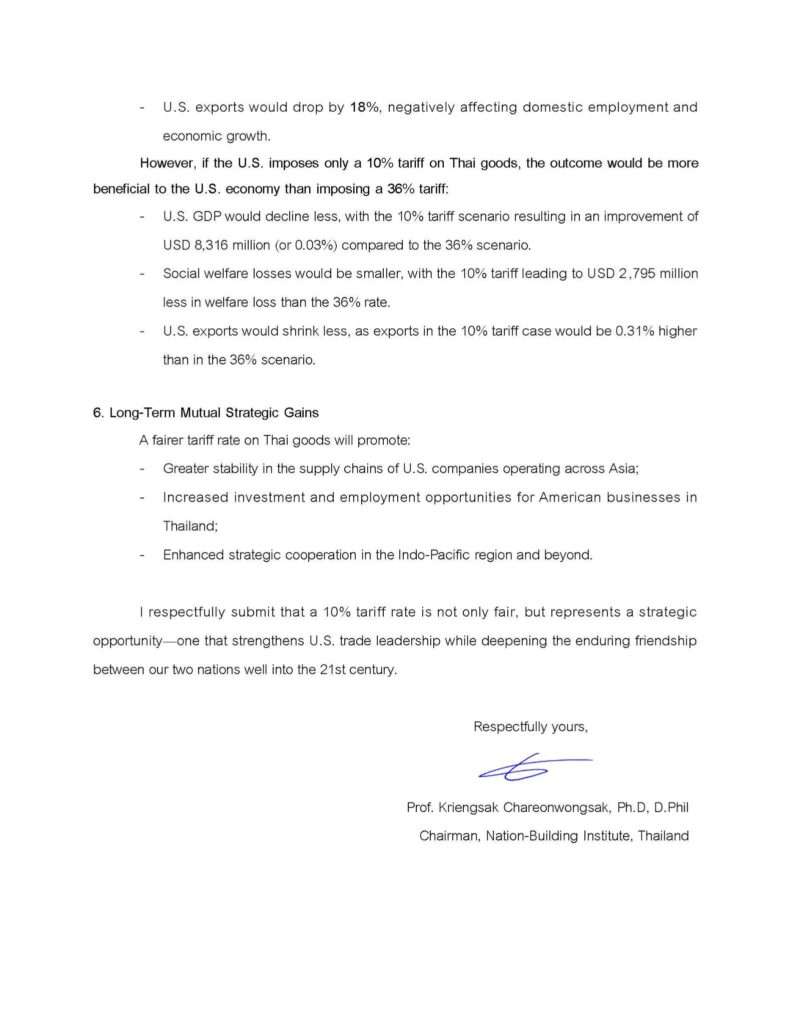
- U.S. exports would drop by 18%, negatively affecting domestic employment and economic growth.
However, if the U.S. imposes only a 10% tariff on Thai goods, the outcome would be more beneficial to the U.S. economy than imposing a 36% tariff: - U.S. GDP would decline less, with the 10% tariff scenario resulting in an improvement of USD 8,316 million (or 0.03%) compared to the 36% scenario.
- Social welfare losses would be smaller, with the 10% tariff leading to USD 2,795 million less in welfare loss than the 36% rate.
- U.S. exports would shrink less, as exports in the 10% tariff case would be 0.31% higher than in the 36% scenario.
- Long-Term Mutual Strategic Gains
A fairer tariff rate on Thai goods will promote:
- Greater stability in the supply chains of U.S. companies operating across Asia;
- Increased investment and employment opportunities for American businesses in Thailand;
- Enhanced strategic cooperation in the Indo-Pacific region and beyond.
I respectfully submit that a 10% tariff rate is not only fair, but represents a strategic opportunity—one that strengthens U.S. trade leadership while deepening the enduring friendship between our two nations well into the 21st century.
Respectfully yours,
Prof. Kriengsak Chareonwongsak, Ph.D, D.Phil
Chairman, Nation-Building Institute, Thailand


