
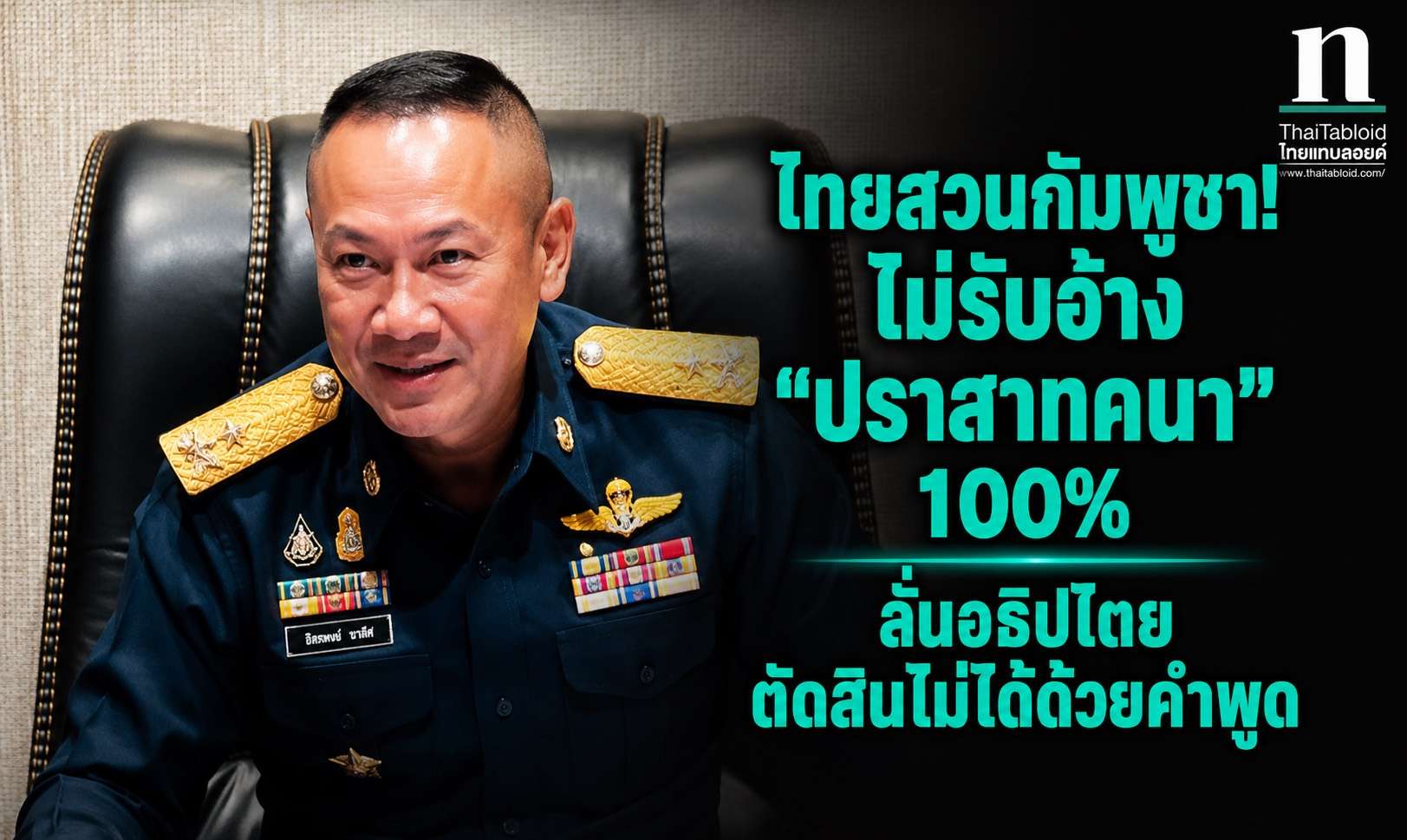
วันที่ 30 มิถุนายน 2569 (เวลา 16.00 น.) พล.อ.อ.ประภาส สอนใจดี ผู้อำนวยการศูนย์ข่าวสารสถานการณ์ไทย-กัมพูชาเปิดเผยว่า ตามที่มีการเผยแพร่คำให้สัมภาษณ์ของเจ้าหน้าที่ฝ่ายกัมพูชา อ้างว่า “ปราสาทคนาเป็นของกัมพูชา 100%” พร้อมกล่าวหาว่าไทยเข้ายึดครองพื้นที่ เปลี่ยนแปลงสภาพโบราณสถาน และทำลายบันไดทางขึ้นนั้น ศูนย์ข่าวสารสถานการณ์ ไทย-กัมพูชา (JIC) ขอชี้แจงต่อสาธารณชนและประชาคมระหว่างประเทศ ดังนี้
- ไทยไม่ยอมรับการกล่าวอ้างฝ่ายเดียวเกี่ยวกับอธิปไตยเหนือพื้นที่ดังกล่าวว่าเป็นของฝ่ายใดฝ่ายหนึ่งโดยเด็ดขาด เนื่องจากเป็นเพียงการกล่าวอ้างฝ่ายเดียว มิใช่ข้อยุติตามหลักกฎหมายระหว่างประเทศ ทั้งนี้ พื้นที่ที่ยังมีความเห็นต่างเกี่ยวกับแนวเขตแดนต้องได้รับการพิจารณาภายใต้กลไกทวิภาคีที่ทั้งสองประเทศตกลงร่วมกัน โดยอาศัยหลักฐานที่เกี่ยวข้องอย่างรอบด้าน อาทิ สนธิสัญญา เอกสารทางประวัติศาสตร์ที่มีน้ำหนักทางกฎหมาย และการปักหลักเขตแดนในอดีต มิใช่ตามการกล่าวอ้าง การแถลง หรือการตีความแผนที่ฝ่ายเดียว
- ลำพังการอ้างอิงแผนที่ไม่อาจใช้ตัดสินอธิปไตยได้ และการอ้างว่า ไม่ว่าจะใช้แผนที่มาตราส่วน 1:200,000 หรือ 1:50,000 ปราสาทคนาอยู่ในกัมพูชาเสมอนั้น เป็นเพียงการกล่าวอ้างฝ่ายเดียวของฝ่ายกัมพูชา ซึ่งตามกฎหมายระหว่างประเทศ ไทยและกัมพูชายังคงต้องดำเนินการสำรวจและจัดทำหลักเขตแดนผ่านกลไกทวิภาคี โดยพิจารณาหลักฐานที่มีน้ำหนักทางกฎหมายประกอบกันหลายประการ จึงไม่อาจสรุปประเด็นอธิปไตยจากการตีความแผนที่ฝ่ายเดียวได้
- การดำเนินการของไทยอยู่ภายในพื้นที่ที่ไทยถือว่าอยู่ภายใต้การควบคุมของตน มาตรการรักษาความปลอดภัย การควบคุมพื้นที่ และการดูแลโบราณสถานของฝ่ายไทย เป็นการดำเนินการภายในพื้นที่ที่ประเทศไทยถือว่าอยู่ภายใต้การควบคุมของตน และเป็นไปตามถ้อยแถลงร่วมอย่างเคร่งครัด ประเทศไทยปฏิเสธข้อกล่าวหาว่าไทยได้เข้าไป “ยึดครอง” ดินแดนของกัมพูชาตามที่มีการกล่าวอ้าง
- ข้อกล่าวหาเรื่องการทำลายบันไดต้องพิสูจน์ด้วยหลักฐาน ข้อกล่าวหาว่าฝ่ายไทยเผาหรือทำลายบันไดทางขึ้นปราสาทเป็นข้อกล่าวหาที่ต้องพิสูจน์ด้วยพยานหลักฐานที่ตรวจสอบได้ ประเทศไทยพร้อมให้มีการตรวจสอบข้อเท็จจริงบนพื้นฐานของหลักฐานเชิงประจักษ์ การสรุปตามข้อกล่าวหาจากคำกล่าวอ้างฝ่ายเดียวเป็นสิ่งที่ไม่สามารถยอมรับได้
- ไทยยึดมั่นแนวทางสันติและกลไกทวิภาคี ประเทศไทยยืนยันแนวทางการแก้ไขปัญหาชายแดนไทย–กัมพูชาผ่านกลไกทวิภาคีที่ทั้งสองประเทศตกลงร่วมกัน และยังคงยึดมั่นตามถ้อยแถลงร่วมในการลดความตึงเครียด ไม่ยั่วยุ ไม่ใช้กำลัง และหลีกเลี่ยงการดำเนินการใด ๆ ที่อาจทำให้สถานการณ์บานปลาย
- การสื่อสารต่อสาธารณะควรอยู่บนพื้นฐานของข้อเท็จจริง ประเทศไทยขอเรียกร้องให้ทุกฝ่ายหลีกเลี่ยงการเผยแพร่ข้อมูลที่อาจก่อให้เกิดความเข้าใจคลาดเคลื่อนหรือเพิ่มความตึงเครียด ทั้งนี้ ประเด็นอธิปไตยและเขตแดนเป็นเรื่องละเอียดอ่อน จึงควรปล่อยให้เป็นไปตามหลักกฎหมายระหว่างประเทศและกลไกทวิภาคีที่ทั้งสองประเทศตกลงร่วมกัน ไม่ควรกล่าวอ้างหรือตัดสินจากข้อมูลจากการสื่อสารฝ่ายเดียว
ไทยพร้อมดำเนินการอย่างสร้างสรรค์บนพื้นฐานของกฎหมายระหว่างประเทศ ความสุจริตใจ และความสัมพันธ์
อันดีระหว่างประเทศเพื่อนบ้าน เพื่อธำรงสันติภาพและเสถียรภาพอย่างยั่งยืนตามแนวชายแดนไทย–กัมพูชา
Clarification Regarding Claims Concerning “Prasat Khana”
Following the dissemination of an interview given by a Cambodian official claiming that “Prasat Khana belongs 100% to Cambodia,” and accusing Thailand of allegedly occupying the area, altering the historical site, and destroying the staircase leading to it, the Joint Information Center on the Thailand – Cambodia Situation (JIC) wishes to clarify to
the public and the international community, the following:
- Thailand does not accept any unilateral claim of sovereignty made over the said area. Such a claim is unfounded and does not constitute any type of resolution under international law. Areas about which there are differing opinions regarding border demarcation must be considered under the bilateral mechanism agreed upon by both countries, based on comprehensive evidence such as treaties, legally significant historical documents and past border demarcations, not on unilateral claims, statements or unilateral interpretations of maps.
- Referring solely to maps cannot determine sovereignty over the area. The claim that Prasat Khana was always in Cambodia regardless of whether a 1:200,000 or 1:50,000 scale map is applied is merely a unilateral claim being made by the Cambodian side. Under international law, Thailand and Cambodia must continue to survey and demarcate the border through bilateral mechanisms, considering various legally weighted pieces of evidence. Therefore, the issue of sovereignty cannot be concluded based on a unilateral interpretation of a map.
- Thailand’s actions are within areas under its control. Therefore, Thailand’s security and area control measures as well as its preservation of historical sites are conducted within areas it considers under its control and are undertaken strictly in accordance with the Joint Statement. Thailand strongly rejects the allegation
that it has “occupied” Cambodian territory. - The allegation that Thailand burned or destroyed a staircase leading to the temple must be proven by verifiable evidence. Thailand is ready for a fact-finding investigation based on empirical evidence. Conclusions based on unilateral claims are unacceptable.
- Thailand adheres to a peaceful approach and bilateral mechanisms. Thailand reaffirms
its commitment to resolving the Thailand-Cambodia border issue through bilateral mechanisms agreed upon
by both countries and remains committed to the Joint Statement on de-escalating tensions, refraining from provocation, avoiding the use of force and avoiding any actions that could escalate the situation. - Public communication should be based on facts. Thailand urges all parties to avoid disseminating information that could lead to misunderstandings or increase tensions. Issues of sovereignty and borders are sensitive and should be handled in accordance with principles international law and bilateral mechanisms agreed upon by both countries. Decisions should not be based on one-sided communications.
Thailand is prepared to act constructively, based on international law, good faith and good relations with its neighbors, to maintain lasting peace and stability along the Thailand-Cambodia border.
The Joint Information Center on the Thailand – Cambodia Situation
30 June 2026, 16.00 hrs.


