
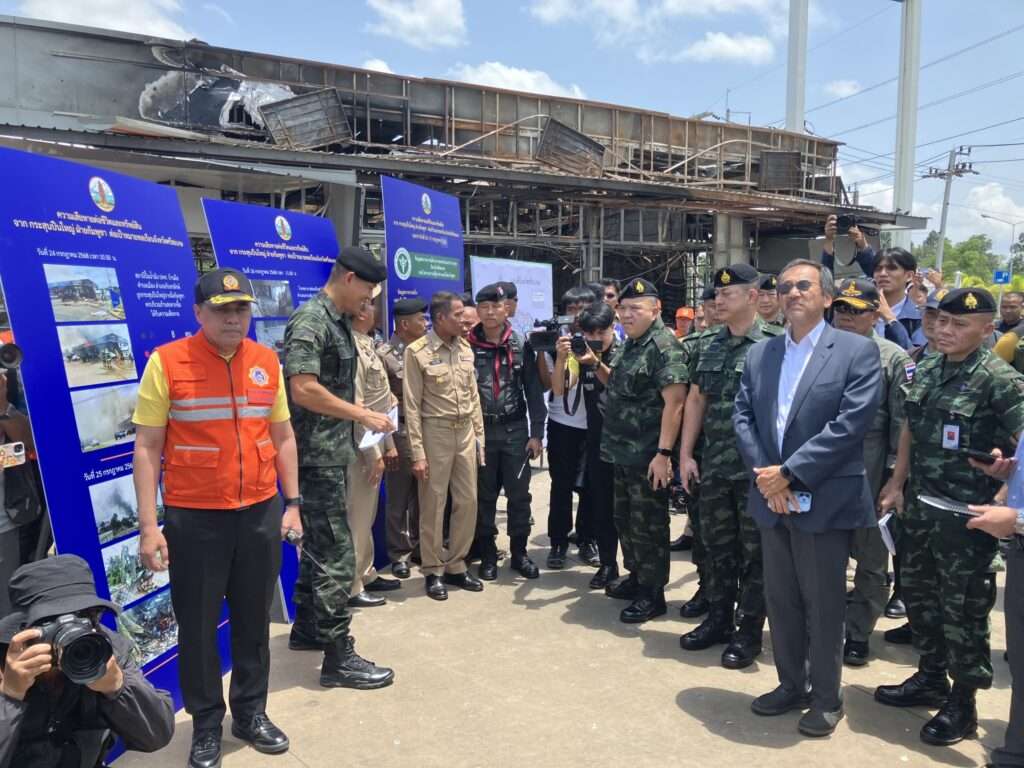
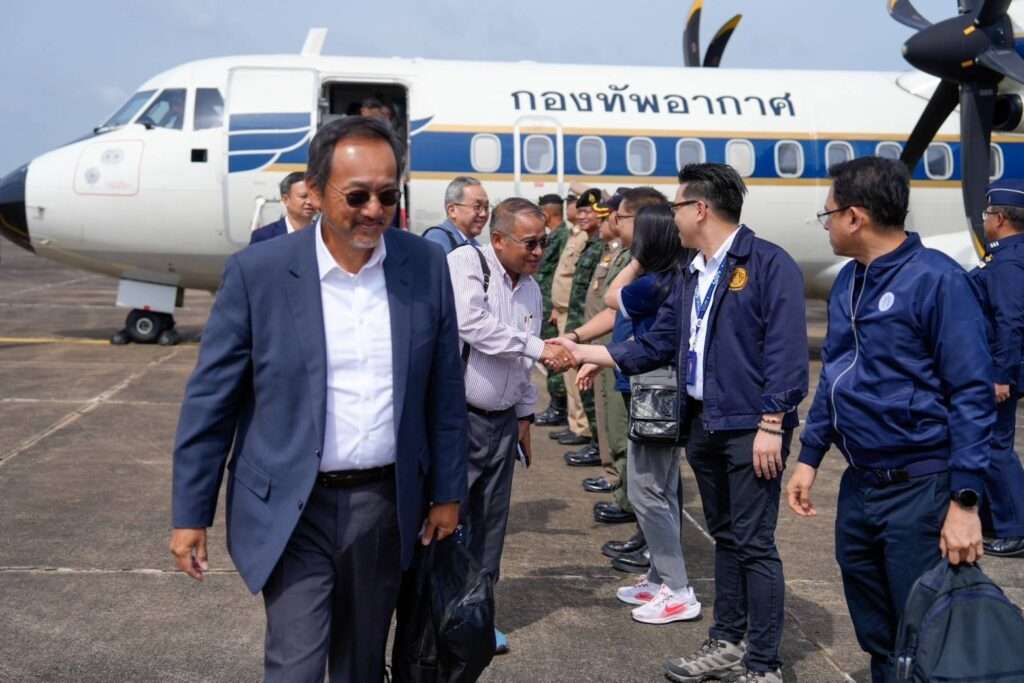
เมื่อวันที่ 1 ส.ค.2568 พันเอก พัฒนา พันธุ์มงคล ธุ์มงคล – รองผู้อำนวยการสำนักวิเทศสัมพันธ์ ผู้แทน กรมข่าวทหารบก กล่าวชี้แจง ต่อ เอกอัครราชทูต 3 ประเทศ คือ บรูไน ญี่ปุ่น เมียนมา อุปทูต 2 ประเทศคือ มาเลเซีย สปป.ลาว และ ผู้แทนทางการทูตระดับต่าง ๆ 6 ประเทศ คือ อินโดนีเซีย สหรัฐฯ สิงคโปร์ จีน เวียดนาม ฟิลิปปินส์และทูตทหาร รวม 23 ประเทศ เช่น จีน มาเลเซีย ปากีสถาน เกาหลีใต้ รัสเซีย สิงคโปร์ อินเดีย แคนาดา ฝรั่งเศส สหรัฐอเมริกา ญี่ปุ่น อิตาลี เนเธอร์แลนด์ สวีเดน สวิตเซอร์แลนด์ พร้อมสื่อมวลชนไทยและต่างประเทศรวม150คน เช่น Agencia EFE, AFP, Asahi Shimbun, CNN, CCTV, CMG, NHK, Reuters, Xinhua
ลำดับเหตุการณ์และข้อเท็จจริงฝ่ายกัมพูชาดำเนินการยั่วยุตั้งแต่ต้นปี 2568 ผ่านกิจกรรมทั้งทางทหารและพลเรือน ได้แก่ การพานักท่องเที่ยวร้องเพลงปลุกใจในพื้นที่ปราสาทตาเมือนธม (13 ก.พ.), การเผาศาลาตรีมุข (28 ก.พ.), การดัดแปลงภูมิประเทศแนวชายแดนเพื่อวัตถุประสงค์ทางการทหาร (มี.ค.–เม.ย.), การเสริมกำลังและยุทโธปกรณ์ประชิดชายแดน (เม.ย.–พ.ค.) รวมถึงการลักลอบขุดคูติดต่อในเขตไทย และการวางทุ่นระเบิด PMN-2 ทำให้ทหารไทยขาขาด 2 นาย และบาดเจ็บอีกหลายราย ถือเป็นการละเมิดอนุสัญญาออตตาวาอย่างร้ายแรง นอกจากนี้ ยังมีการส่งมวลชนและทหารในเครื่องแบบ-นอกเครื่องแบบมาจัดกิจกรรมยั่วยุในพื้นที่ปราสาทตาควายและปราสาทตาเมือน ทำให้เกิดการปะทะกับคนไทยในพื้นที่อย่างต่อเนื่อง
ฝ่ายไทยจึงใช้มาตรการควบคุมชายแดน โดยการล้อมรั้วลวดหนามเพื่อป้องกันการบุกรุก แต่ฝ่ายกัมพูชายังคงยกระดับการโจมตี โดยเมื่อวันที่ 24 ก.ค. 68 ทหารกัมพูชายิงใส่ทหารไทยก่อนบริเวณปราสาทตาเมือนธม
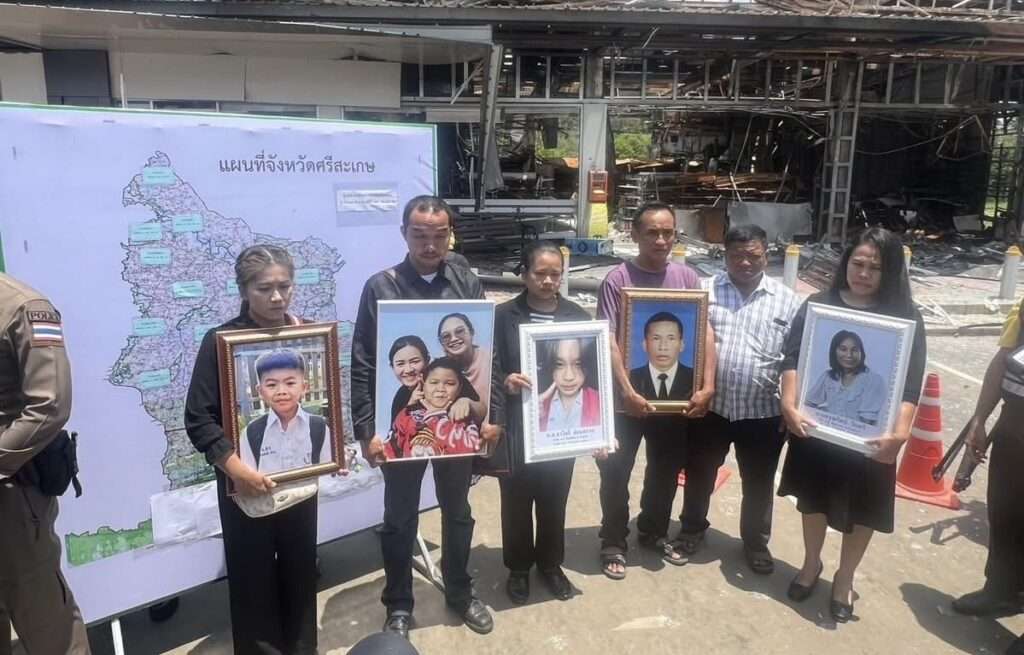
ก่อนจะยกระดับ ความรุนแรง ขยายเป็นการใช้ปืนใหญ่และจรวด BM-21 โจมตีเป้าหมายพลเรือนลึกเข้าไปในประเทศไทย เช่น รพ.พนมดงรัก ปั๊มน้ำมันบ้านผือ ร้านสะดวกซื้อ โรงเรียน และบ้านเรือนในสุรินทร์ บุรีรัมย์ ศรีสะเกษ และอุบลราชธานี มีผู้บาดเจ็บ 15 ราย เสียชีวิต 36 ราย (รวมเด็ก 1 คน) และต้องอพยพมากกว่า 150,000 คน
ฝ่ายไทยจึงตอบโต้ภายใต้หลักการป้องกันตนเอง (ตามArticle 51 ของกฎบัตรสหประชาชาติ) อย่างจำเป็นและได้สัดส่วน โดยมีเป้าหมายทางทหารเท่านั้น ขณะที่ฝ่ายกัมพูชายิงจากเขตพลเรือนและใช้ประชาชนเป็นโล่มนุษย์
สถานการณ์ปัจจุปัน
หลังการเจรจาหยุดยิงที่มาเลเซียเมื่อวันที่ 28 ก.ค. 68 ฝ่ายกัมพูชายังคงละเมิดข้อตกลงต่อเนื่อง โดยในช่วงหลังเที่ยงคืนได้บุกรุกพื้นที่ 6 จุด ได้แก่ Chong Bok (อุบลราชธานี), Sam Tae, Pha Mor E Daeng, Phu Ma Khua/Khanmar, Phlan Yao (ศรีสะเกษ), และปราสาทตาควาย (สุรินทร์) โดยการละเมิดยังดำเนินต่อถึงวันที่ 30 ก.ค. เวลา 05.10 น. ตามภาพหลักฐาน
ล่าสุด วันที่ 31 ก.ค. 68 พบว่ากัมพูชาเพิ่มกำลังตามแนวชายแดน และใช้อากาศยานไร้คนขับ (โดรน) ล้ำเข้ามาในเขตไทยเพื่อสอดแนม ซึ่งเป็นสัญญาณเชิงยุทธศาสตร์ที่บ่งชี้ถึงความไม่จริงใจในการเคารพข้อตกลงหยุดยิง
(1) การตอบโต้การบิดเบือนข้อมูลของฝ่ายกัมพูชา ซึ่งได้เผยแพร่ข้อมูลบิดเบือนหลายประเด็น ได้แก่ (1) กล่าวหาว่าไทยรุกรานและละเมิดอธิปไตย ซึ่งไทยยืนยันว่าปฏิบัติตาม Article 51 ของกฎบัตรสหประชาชาติอย่างเคร่งครัด และมีสิทธิตอบโต้ด้วยความจำเป็นและได้สัดส่วน
(2) กล่าวหาไทยใช้ระเบิดเคมี ซึ่งเป็นเท็จโดยสิ้นเชิง ไทยไม่มีการใช้หรือครอบครองอาวุธเคมี การอ้างภาพระเบิดเคมี เป็นภาพจากเหตุการณ์ดับไฟป่าในรัฐแคลิฟอร์เนีย ปี 2022
(3) กล่าวหาว่าไทยใช้ F-16 และอาวุธหนักเพื่อโจมตี ซึ่งไม่เป็นความจริง อาวุธทุกชนิดที่ใช้เพื่อการป้องกันตนเองและใช้เฉพาะเป้าหมายทางทหาร
(4) กล่าวหาไทยทิ้งระเบิด MK-84 ใส่บ้านเรือนประชาชน โดย CMAC ของกัมพูชานำเสนอภาพเก่าและอ้างว่าเป็นของไทย ทั้งที่เป็นวัตถุระเบิดเก่าสมัยสงครามเวียดนาม ไทยปฏิเสธข้อกล่าวหานี้อย่างสิ้นเชิง และขอให้กัมพูชาหยุดเผยแพร่ข้อมูลเท็จ พร้อมเชิญชวนให้ร่วมมือกับไทยและประชาคมโลกเพื่อคลี่คลายสถานการณ์ด้วยสันติวิธี
(5) ไทย ขอยืนยันว่าเหตุปะทะครั้งนี้เกิดจากการโจมตีก่อนของฝ่ายกัมพูชา โดยใช้อาวุธระยะไกลโจมตีเป้าหมายพลเรือนอย่างรุนแรงและต่อเนื่อง ทั้งที่มีการเจรจาหยุดยิงแล้ว ฝ่ายกัมพูชายังละเมิดข้อตกลงและปล่อยข้อมูลบิดเบือนอย่างเป็นระบบ ไทยขอให้ประชาคมระหว่างประเทศติดตามสถานการณ์อย่างเข้าใจ และร่วมผลักดันให้เกิดการเจรจาแบบทวิภาคี เพื่อแก้ไขปัญหาภายใต้หลักสันติวิธี
สำหรับลำดับ เหตุการณ์ ตั้งแต่ต้น
-กัมพูชายั่วยุสร้างสถานการณ์ตั้งแต่ต้น
ตั้งแต่ร้องเพลงปลุกใจที่ปราสาทตาเมือนธม เรื่อยมา
-เผาศาลาตรีมุข 28กพ.2568 สัญลักษณ์ความสัมพันธ์ไทย-ลาว-กัมพูชา
-ล้ำดินแดนไทย ที่ช่องบก
การปะทะขนาดขนาดเล็ก 28 พฤษภาคม 2568 ทหารกัมพูชายิงก่อนฝ่ายไทยจึงต้องยิงตอบโต้ในสัดส่วนที่เหมาะสม
-วางทุ่นระเบิดสังหาร PMN2 ที่ช่องบก ทำให้ทหารไทยเสียขาไป2 นาย ถือว่าละเมิดอนุสัญญาออตตาวา
-พบมีการใช้ทุนระเบิดสังหารบุคคลในการสู้รบ 24-28 กค.2568 และยังคงวางสนามทุ่นระเบิดอยู่ในพื้นที่
ทหารกัมพูชา ยิงจากเขตพลเรือนและใช้ประชาชนเป็น โล่มนุษย์
ทหารกัมพูชายิง อาวุธหนัก ใส่ เป้าหมายพลเรือน อย่างจงใจ ทั้งโรงพยาบาลโรงเรียน ปั๊มน้ำมัน ร้านสะดวกซื้อ และหมู่บ้าน ส่งผลให้ประชาชนคนไทยและเด็กเสียชีวิต บาดเจ็บจำนวนมาก
-ละเมิดข้อตกลงหยุดยิง ด้วยการใช้อาวุธยิงฝ่ายไทยต่อเนื่องอีก2 วัน ใน6 จุด
-ละเมิดข้อตกลงหยุดยิงด้วยการ เพิ่มกำลังตามแนวชายแดน และใช้อากาศยานไร้คนขับ (โดรน) ล้ำเข้ามาในเขตไทยเพื่อสอดแนม
ปล่อยข่าวปลอม สร้างความเกลียดชังและยั่วยุฝ่ายไทย
กล่าวหาไทยใช้อาวุธเคมี โดยเอาภาพเก่าสมัยดับไฟป่าที่แคลิฟอร์เนียมาเผยแพร่ว่า ไทยใช้ระเบิด MK 84 ที่เป็นระเบิดเก่า ยุคสงครามเวียดนาม
แต่เอามาใส่ร้ายไทยว่า ใช้คลัสเตอร์ บอมบ์
-การใช้เครื่องบินรบโจมตีเฉพาะเป้าหมายทางทหารและที่บัญชาการและยิงอาวุธ ใส่ประเทศไทย ในสัดส่วนที่เหมาะสม
Official Thai Army Statement to Military Attaché, Diplomats, Thai and Foreign Media.
Clarification on the Thai-Cambodian Border Conflict
Your Excellency, Members of the Diplomatic Corps, Military Attachés Corps to Thailand,
Press, and distinguished guests from the Army, Air Force, ISOC, Foreign affair, representative of
the Army 2nd area, and senior official Delegation led by Mr. Rat Chaleejun, Assistant Minister of Foreign Affairs. On behalf of the Royal Thai Army, I extend my sincere gratitude to all of you for your attention and presence on this trip. The objective is to provide an opportunity to witness the current conditions and the situation in the area. The impact on the local community and infrastructure.
This briefing session aims to provide facts and Explanation of the recent conflict along the Thai-Cambodian border. We will Outline the actions taken by the Royal Thai Armed Forces to uphold national sovereignty in accordance with international law. Furthermore, we reaffirm our unwavering commitment to resolving this issue through bilateral mechanisms with
Cambodia, guided by sincerity and peaceful means.
Topics of the briefing:
- Sequence of Events & Facts
- Current Situation
- Cambodian Disinformation
- Sequence of Events & Facts
1.1 Sequence of Events
Since the beginning of 2025, the Cambodian side has conducted provocative actions to create tensions through military and civilian activities, with the following key sequence of events:
February 13, 2025: Bringing tourists to sing patriotic songs in the Ta Muen Thom temple
area- February 28, 2025: Burning of the Trimukh Pavilion, which is a symbolic structure
representing international cooperation between Thailand, Cambodia, and Laos
March to April 2025: Cambodian soldiers modified the terrain along the border area for military purposes, such as strengthening fortifications, improving routes, and expanding additional trenches lines into Thai territory
April to May 2025: The Cambodian side moved additional personnel and military equipment closer to the border, significantly increasing their presence, as evidenced by satellite
imagery analysis by foreign researchers. Subsequently, the Cambodian side intruded into Thai territory by digging trenches
- May 28: Cambodia began open fire in a skirmish between both units, with the Thai side responding in self-defense in the Chong Bok area. The Thai military and government attempted to resolve the problem through bilateral means, which were unsuccessful
- July 2025: Cambodian soldiers intruded and secretly planted anti-personnel mines in multiple areas within Thai territory, causing Thai soldiers on patrol to be injured and lose legs from PMN-2 anti-personnel mines on two occasions. This constituted a serious and deliberate violation of humanitarian principles by the Cambodian side, as well as an intentional violation of
the Ottawa Convention that both Thailand and Cambodia has ratified. In fact, before the incidents, there was a demining operation by Thai troops and safely cleared the area.
Following the incident, Cambodian officials denied any involvement. However, there is undeniable evidence supporting the occurrence of their actions. Meanwhile, the Cambodian side attempted to be provocative displays by sending Cambodian soldiers both in uniform and out of uniform posing as civilians, as well as organizing crowds of Cambodians from Phnom Penh and nearby areas to enter the Ta Kwai temple, Ta Muen temple, and other areas along theborder to create content and engage in provocative behavior toward Thai tourists, Thai civilians,and Thai soldiers in the area, leading to confrontations with risks of clashes between the Thaiand Cambodian people in various temple areas.
1.2 Border Control Measures and Cambodia’s Opening Fire After Thai soldiers stepped on the PMN-2 anti-personnel mines for the second time, the situation showed signs of escalating.
This could endanger innocent civilians from such anti-personnel mines. The Thai side therefore, implemented border control measures in all temple areas along the border by installing barbedwire fencing. July 24, 2025: Cambodian soldiers began firing at Thai soldiers stationed at Ta Muen Thom temple first, using small arms, guns, and mortar grenade launchers, leading to clashes.
Subsequently, the Cambodian side escalated to using combat forces and supporting weapons,
artillery, and BM-21 multiple rocket launchers to attack the Thai side along the entire border,
and deliberately targeting civilian objectives located nearly 10 to 30 kilometers from the border line as follows:
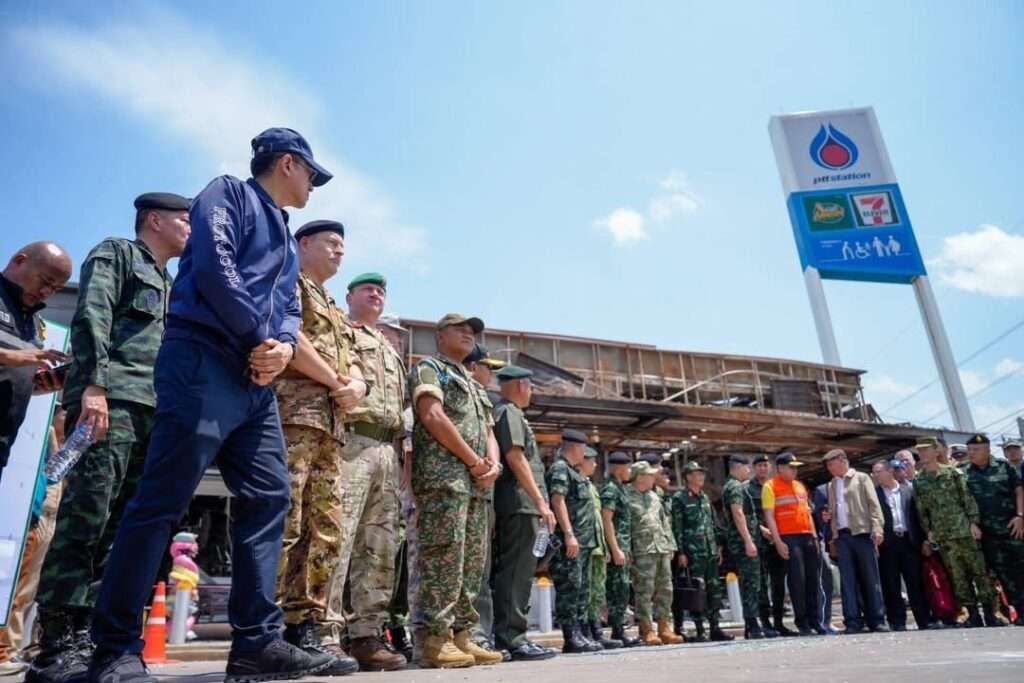
- Phanom Dong Rak Hospital, Surin Province
- PTT gas station at Ban Phue, Kantharalak District, Sisaket Province
- 7-Eleven convenience store at Ban Phue, Kantharalak District, Sisaket Province
- Schools in Surin and Sisaket provinces
- Civilian homes such as Ban Kruad village, Ban Kud Chiang in Surin, Buriram, Sisaket, and
Ubon Ratchathani provinces.
This resulted in 15 deaths and 36 injuries, with one of the deceased being only 8-year-
old child, and more than 150,000 people requiring evacuation.
1.3 Thailand’s Response Under the Framework of International Law From the
aforementioned events, the Thai side has conducted retaliatory actions under the principle of
the Right of Self-Defense as stipulated in international law, particularly Article 51 of the UN
Charter, which states that “Nothing in the present Charter shall impair the inherent right of
individual or collective self-defence if an armed attack occurs against a Member of the United
Nations.” Thailand’s response is therefore a lawful action conducted under the principles of
Necessity and Proportionality, with the sole objectives of deterring threats, reducing civilian
casualties, and maintaining national sovereignty stability. Thailand has no intention to invade or
take any actions beyond the scope of self-defense against threats from the Cambodian side.
Thailand has targeted only military objectives, while the Cambodian side has used indiscriminate targeting, resulting in civilian casualties in the Thai territory. Furthermore, positioned supporting weapons in civilian community areas, essentially using human shields, which Thailand refrained from targeting in response. This constitutes a deliberate and serious violation of international humanitarian law and human rights principles. That is unforgivable, and no civilized nation in the world would accept such inhumane actions.2. Current Situation – Cambodia Continues Military Operations.
2.1 After the ceasefire agreement negotiations in Malaysia on July 28, 2025, after midnight, the Cambodian side violated the ceasefire agreement in the following areas:
(1) Chong Bok Area, Ubon Ratchathani Province
(2) Sam Tae Area, Si Sa Ket Province
(3) Pha Mor E Daeng, Si Sa Ket Province
(4) Phu Ma Khua/Khanmar Area, Si Sa Ket Province
(5) Phlan Yao Area, Si Sa Ket Province
(6) Ta Kwai Temple, Surin Province
The Cambodian side continued to violate the ceasefire agreement until July 30, 2025, at
0510 hours. Details as shown
2.2 On July 31, 2025, Cambodian soldiers were detected reinforcing their forces in areas
along the entire Thai border, and the use of drones conducting surveillance in the inner area of
Thai territory in significant number
- Cambodian Disinformation
Cambodia alleges that:
3.1 Thailand invaded Cambodia and violated UN principles, sovereignty, and territorial
integrity.
Facts: Thailand is a UN member state that strictly respects the UN Charter, including the
principle of non-use of force in resolving international disputes (Article 2(4) UN Charter).
· Thailand’s actions constitute necessary and proportionate self-defense (necessity &
proportionality) under the rights specified in Article 51 of the Charter, after the Cambodian side
used weapons to attack Thai military posts, administrative areas, and the Thai communities in
multiple locations.
· There is clear evidence that Cambodian forces moved into Thai territory on multiple occasions
and used weapons to attack Thai targets, particularly civilian targets, such as attacking Phanom Dong Rak Hospital, which is 10 km from the border, and Ban Phue gas station, which is 30 km from the border.
3.2 Use of Chemical Explosives.Facts: This is a serious and completely baseless allegation. Thailand is a party to theChemical Weapons Convention (CWC) and strictly complies with its provisions. No unit in the Thai military uses chemical weapons, whether tactically or strategically. Such allegations constitute war propaganda and are an attempt to distort facts for defamation purposes.
The case of the “chemical explosives” Images disseminated by the Cambodian government are actually footage from wildfire suppression missions in California, United States, in 2022, which can be viewed through online media.
3.3 Thailand uses F-16 aircraft and large quantities of heavy weapons. Facts: All weapons used in the response were appropriate and proportionate, aimed at
deterring Cambodian incursions and targeting military objectives along the border area. This was not an offensive attack. The F-16 attacked the military targets in self-defense. After Cambodian forces fired BM-21 rockets into Thai civilian communities and the operation of F-16 aircraft provided Close Air Support with limited targets.
On the other hand, it is the Cambodian side that deployed forces and fired weapons such as Cambodian BM-21 from civilian areas, using communities as “human shields,” which
constitutes a serious violation of International Humanitarian Laws. Moreover, Cambodian officials had evacuated their people out of the border area even before the clash started, while Thai civilians remained in their living place because we did not expect to be under attack by the Cambodian rockets.
3.4 Thailand used MK-84 bombs that fell on Cambodian civilian homes. The statement by the head of Cambodia’s CMAC, alleging that Thailand recently dropped MK-84 bombs in Cambodia, clearly bears the characteristics of disinformation by citing old images and creating false connections. The Thai side completely rejects Cambodia’s allegations. The images of explosive ordnance that Cambodia claims to be MK-84s are actually old explosives from the Vietnam War era. This allegation is not consistent with scientific proof, as shown in the picture. Thailand hereby condemns and calls on Cambodia to stop making false allegations aimed at inciting hatred, and requests that Cambodia cooperates with Thailand and the international community in peacefully resolving the border situation through straightforward negotiations and cooperation.Most recently, on July 30, 2025, the Cambodian side invited the foreign military attachés stationed in Cambodia to inspect the area 30 km from the border. However, the Cambodian side changed plans to take the delegation to the Chong An Ma area, the border line, which is a combat zone where this zone is a disputed area. Therefore, they violated MOU43.
Lastly, for the detainee, RTA will treat them as prisoners of war in compliance with the
Geneva Convention, and two of them will be returned to Cambodia today. The rest will be
treated under international law.
Summary The Royal Thai Army emphasizes that in the clashes between Thailand and Cambodia,the Cambodian side fired first, using long-range weapons to target civilian objectives and causing unacceptable loss of life and property damage to civilians. Despite the ceasefire agreement, the Cambodian side continues to violate the ceasefire agreement. Furthermore, Cambodia systematically disseminates distorted and false information. We call upon the international community to monitor the situation with understanding and jointly pushing for bilateral negotiations to resolve the problem through peaceful means.
Thank you


